
by Kritika Pandey
Definition
A typical way, behaviour, mindset, rule, or functioning set.
Origin
This theory comes from the book ‘Four Theories of the Press’.
Theories of Press
Authoritarian Press
Libertarian Press
Social Responsibility Press
Soviet/Communist Media
Note
The entire framework talks about the relationship between the
government and the media.
Authoritarian Press

- If the government is authoritarian, the media reflects that in its functioning and behavior.
- In 1640 (England), people were working on the right to speech.
- Before 1215, no democracy existed.
- In 1498, the invention of the printing press occurred. Knowledge was only available to
princely classes. 99% of the population had no access to current affairs or even religious
books. Attempting to access or spread such knowledge led to punishment. - During this period, monarchy prevailed. Only the King’s word was supreme. No freedom of
speech or expression. - By 1640, people started discussing the importance of such freedoms.
- From 1498 to the French Revolution and much later, only authoritarian press existed.
- Monarchs and dictators controlled the press. Even today, countries like China, Cuba, and
North Korea have authoritarian press.
Libertarian Press
- This press exists only as an assumption, not in reality.
- A truly liberal government is required for such a press to function.
- Classical capitalist governments are expected to support this kind of press.
- This form of press believes in a free market of ideas and opinions.
- All ideas can be expressed freely without censorship.
- Example: In India, certain community affiliations may influence speech freedoms.
In current times, the government is going after those who are telling the truth.
Therefore, this type of press can be seen very rarely.
Social Responsibility Press
(Reflection of Democratic Govt.)

- Distillation of Libertarian Press
- If someone is spreading lies or anything is going wrong in the society, then it must be
- censored before spreading, as a social responsibility.
- In Article 19(1), right to expression & speech – freedom is given to you & in the next lines,
- all of it is taken away from you due to restrictions.
- Example: Hutchins Commission was formed in the US, this did not consist of journalists &
- only consisted of academic people
Soviet/Communist Press
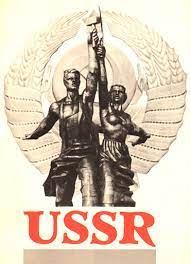
- In 1917, the USSR was formed.
- This press is contrary to Karl Marx’s ideology.
- Marx believed revolution couldn’t happen in agrarian countries, only in capitalist ones.
- However, revolution occurred in such a country, contradicting that belief.
- The Soviet Press reflects a communist government.
 Naren Singh Rao Lectures