by Nishtha Gupta
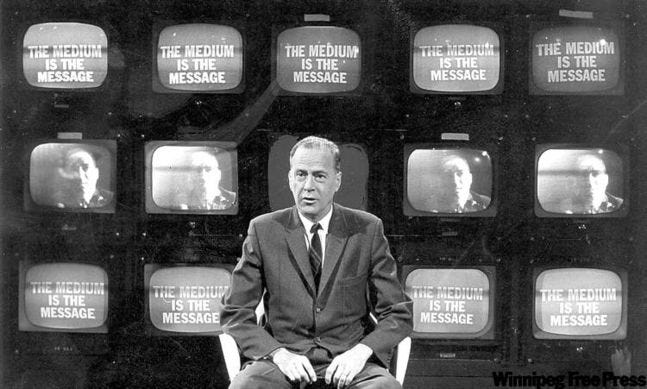
When we talk about media, most of us immediately think of the content, what’s being said, shown, or written. But Marshall McLuhan, a visionary thinker from the 1960s, flipped this idea on its head. In his groundbreaking work “Understanding Media: The Extensions of Man” (1964), he proposed a radical idea: “The medium is the message.”
Now, what does this idea mean? Let’s break it down.
What Is Media?
At the simplest level, media are the means or channels through which we communicate. It could be speech, print, electricity or digital platforms. But to understand the media more deeply, we need to start with human nature.
Humans have always been innovative. From the beginning of our existence, we have interacted with nature using tools and skill sets. These tools reflect our creativity and problem-solving abilities. Over time, tools evolved into more complex systems that helped us connect with each other and understand the world around us.
All these tools are essentially extensions of ourselves. They are things we create to expand our physical or mental abilities. The printing press, for example, is an extension of our voice and memory. It allows thoughts to be recorded and shared widely, long after they are spoken. A car or train is an extension of our feet, allowing us to travel far beyond what we could manage on our own. A telescope extends our vision. The internet extends our minds and speeds up access to knowledge.
As humans, we survive and grow because of two main things: tools and skill sets. These help us shape the environment around us. The tools we create are more than just physical objects. They influence how we behave, how we think and how we relate to each other. They are extensions of our minds and bodies.
That is why McLuhan saw media as more than just channels. He saw them as systems that shape human experience. The medium itself changes how we function.
The Real Message Is in the Medium
McLuhan’s famous line, “The medium is the message,” means that the form of a medium, the way something is communicated, has a greater impact than the content it carries. People usually pay attention to the content, but McLuhan believed that is only the surface. The real message lies in what the medium does to society. A clear example is the light bulb. It doesn’t deliver traditional content like a book or a film. Yet it completely changed our lives. It created new spaces that didn’t exist before. People could now work at night, gather in well-lit areas or extend their active hours. That change, enabled by the bulb, is the message.
Another example is the telephone. Its invention completely changed the way we communicate. It allowed people to talk across distances instantly. It wasn’t just about the words spoken. The telephone itself introduced a new way of living and interacting.
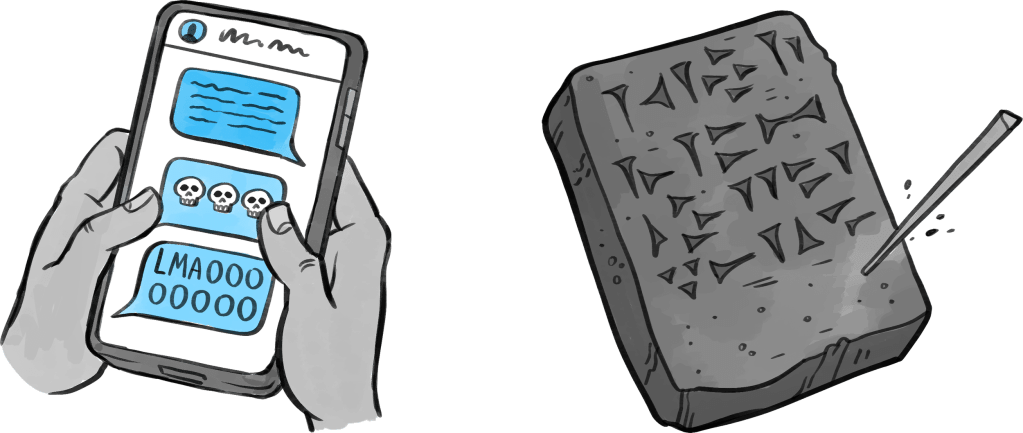
Even something like a play feels different depending on how it is delivered. Take Shakespeare’s Hamlet as an example. Reading the text gives you access to the original language, the structure and the characters’ thoughts. Watching Hamlet performed on stage, however, adds new layers through tone, stage design, lighting and the actor’s performance. It becomes more immersive and emotional.
Now take it a step further. Watch a film adaptation like Vishal Bhardwaj’s Haider, which is based on Hamlet but set in conflict-ridden Kashmir. The film brings in music, cinematic visuals and cultural context, all of which shift the story’s meaning. The essence of the original play is still there, but the medium transforms how we understand it.
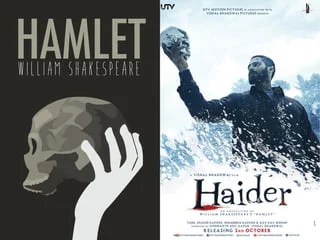
Each version including the written script, the live play and the film, offers a different experience, even though the core story is shared. This clearly shows what McLuhan meant: the medium itself shapes how the message is received.
Content Is the Secondary Message
McLuhan thought that most people make the mistake of focusing only on content. But the content is not the main message. The primary message lies in the structure and nature of the medium. The medium decides how we engage with the content and how it changes our habits.
So when we say “media as a message,” we are saying that the medium, whether it is print, electricity, television or the internet, shapes human behaviour in deep ways. It changes the way we think, feel and connect. That is why McLuhan’s theory is still important when we try to understand the role of media in our lives today.
 Naren Singh Rao Lectures
Leave a comment