
by Himanshi Arora
Walter Benjamin talked about the democratic potential of the phenomena called the mechanical reproduction of art. He wrote this framework in 1935, when he was in France, Paris. Benjamin says that the original work of art has an aura which has been lost because of the mechanical reproduction of art.
Traditionally, any work of art was related to a ritual on the lines of religion. For instance, some of the iconic paintings are of Lord Shiva. According to Benjamin this aura was closely tied to rituals. The works of art were interestingly linked with ritual.
Earlier, only the elite class could afford or experience the original work of art. However, with the advent of the printing press, the works of art are mechanically reproduced. Today common people can access the mechanical reproduced works of art because of the printing press, television and photography.
In the original work of art a sense of aura is performed which is located in time and space. But time and space gets lost because of mechanical reproduction of the work of art.
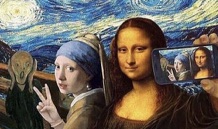
According to Benjamin it is good that earlier it was an elite phenomenon. Only the noble class could afford the works of art. For instance, only the noble class could afford the original paintings of Mona Lisa but because of the mechanical reproduction these paintings have lost their originality.
According to him, mechanically reproduced work has led to the democratization of the works of art. This mechanical reproduction of art is now used for different purposes. When the works of art are mechanically reproduced the originality and space gets lost because of its wide availability rather than a singular experience.
 Naren Singh Rao Lectures
Leave a comment