
by Swaraj Choudhary
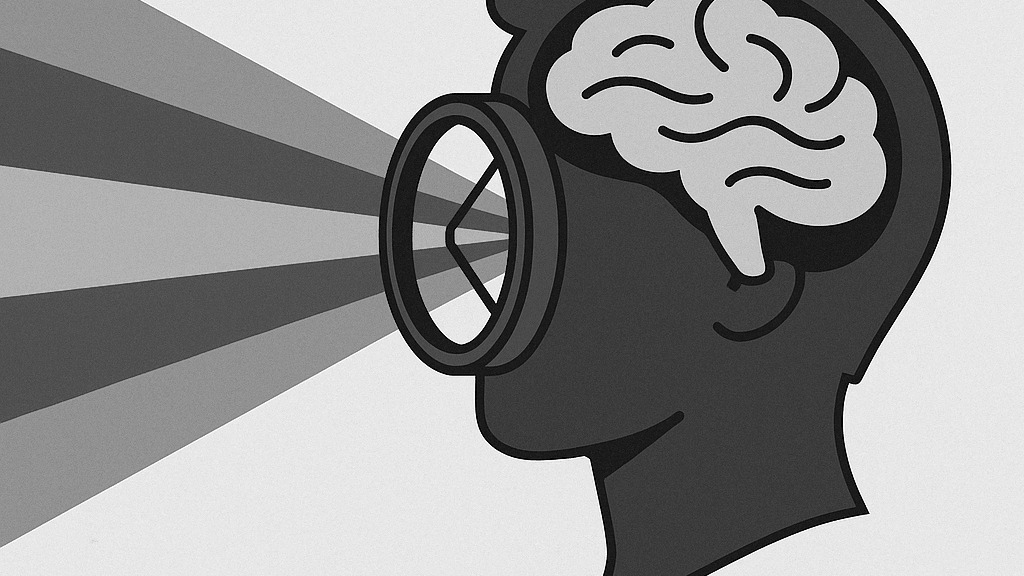
In 1959, American sociologist C. Wright Mills introduced a concept that forever changed the way we understand the relationship between individual lives and broader society. He introduced the concept of ‘sociological imagination’. It’s not just a concept for academics or textbooks, it’s a lens to understand our everyday life. To think sociologically is to question what seems “natural,” to explore the hidden structures that shape our personal lives. This idea encourages us to step beyond our immediate personal experiences and recognize the interplay between our individual biographies and the larger historical and structural forces that shape our lives.
At the heart of sociological imagination is the claim that our private troubles are deeply intertwined with public issues. Mills wanted people to understand that their personal experiences, everything from anxiety about success to unemployment, are not just reflections of personal failure or fortune, but outcomes of the social systems and histories they are born into. This perspective demands that we step outside the narrow lens of individualism and see ourselves in relation to wider social, economic, and political forces. It’s the capacity to see how personal challenges like unemployment, stress, or failure often reflect broader public issues such as economic shifts, cultural expectations, or policy failures. Without this lens, our understanding of the world is limited to what we immediately experience or what “common sense” might suggest, often leading to misplaced blame or shallow interpretations of the complex realities that we are a part of.
In this perspective, there are three interconnected elements: biography, history, and social structure. Biography refers to our individual life paths-our family backgrounds, education, and day-to-day experiences. History encompasses the larger social, political, and economic conditions that have shaped our society over time. Social structure points to the organized patterns of relationships, institutions, and power dynamics that frame how we live. When we learn to think through all three of these together, we begin to understand how individual lives are embedded within the wider social systems.
Mills distinguished between “personal troubles” and “public issues”. A personal trouble may be one person’s difficulty finding a job, but if unemployment is widespread among young people across the country, it becomes a public issue. For instance, many youth in India are turning to gig economy platforms like Swiggy, Zomato, or Uber, drawn by the promise of flexibility and quick income. When one delivery worker struggles to make ends meet, it may be viewed as a personal shortcoming. But sociological imagination helps us see how lack of formal employment, insecure contracts and lack of benefits, create the conditions for such widespread precarity.
The same logic applies to rural farmer suicides, which have become a recurring tragedy in states like Maharashtra, Punjab. From afar, each suicide may appear to be a deeply personal act. Yet collectively, they signal a structural crisis rooted in price volatility, failed irrigation policies, climate unpredictability, and rising indebtedness. Similarly, the intense stress that students face during board exams or competitive tests like IIT-JEE is often dismissed as a matter of personal resilience or failure. But when burnout, anxiety, and depression become common across an entire generation, we are forced to look at the education system that is characterized by overcrowded classrooms, high costs of coaching, rigid definitions of success, and immense familial and societal pressure.
During the COVID-19 lockdown in 2020, the sight of migrant workers walking hundreds of kilometers back to their villages shocked the nation. The focus initially remained on the desperation of individuals. But a sociological imagination allows us to see how decades of policy neglect marked by a lack of affordable housing, absence of formal contracts, weak transport systems created a public crisis that could not be understood merely through individual stories. Likewise, when a woman is harassed in a train, it may be described as a one-off encounter. But when millions of women share similar experiences across cities, towns, and rural settings, it reveals a systemic problem rooted in patriarchal norms, lack of safety infrastructure, and uneven law enforcement.
Even health issues often follow this pattern. For instance, if a child in Delhi suffers from an asthma attack during the winter months, it may be seen as a singular medical event. But when pollution levels breach safe limits in most Indian cities year after year driven by industrial emissions and vehicular traffic we begin to understand how environmental degradation is a public issue with deeply personal consequences.
When we think about issues like body image and mental health issues. These are frequently treated as individual battles. But are they? Or are they the result of persistent social and cultural norms and systemic exclusions? Anxiety over one’s appearance, the pressure to always be productive, or the need to outshine peers, all these can seem like internal dilemmas. But they are, in fact, shaped by a society obsessed with perfection and competition. The value of sociological imagination, then, lies in understanding how it reshapes our understanding of everyday life. It empowers us to locate the root causes of problems not just within ourselves but within the society we inhabit.
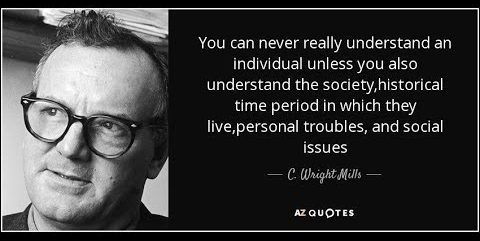
Thus, to truly understand an individual, one must situate their personal story within the larger historical and structural context. Your life is not just your own. It is shaped by where and when you were born, the institutions you passed through, the values you absorbed, the opportunities and obstacles that you had. In this way, history becomes a culmination of countless (personal) biographies, and your biography becomes a small but meaningful reflection of the society.
Mills encouraged individuals to step outside their everyday routines to gain insight into how social norms and values impact their lives. In doing so, we begin to recognize the presence and influence of larger forces, whether that’s capitalism, patriarchy, racism, nationalism, or globalization, shaping our thoughts, actions, and aspirations. Understanding the role of these forces in shaping our lives is the key to developing real knowledge.
This framework also guards us against apathy. Without a sociological imagination, we are vulnerable to accepting the world as it is. We might assume that poverty is natural, that inequality is inevitable, that certain groups always do better because they deserve to. But sociological thinking disrupts that line of thinking. The sociological imagination remains a powerful tool. Mills may have written in 1959, but his message continues to resonate in our world of rising inequality, polarization, and crisis.
To think sociologically is to ask better questions. It is to see personal pain as a social consequence, to see individual success as tied to collective conditions. Most importantly, it is never to take our world at face value.
 Naren Singh Rao Lectures
Leave a comment